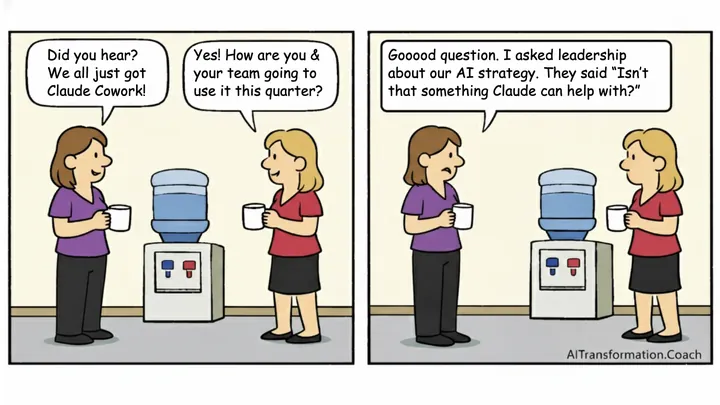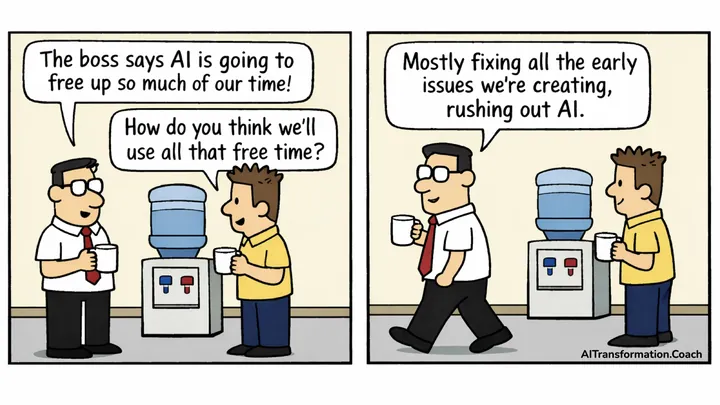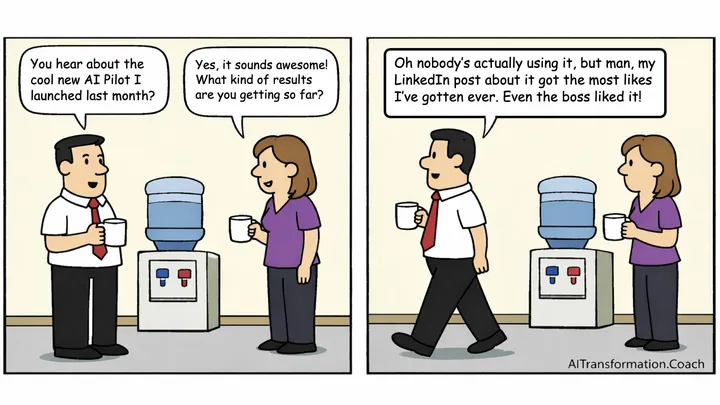
AI wired into a broken process or messy data doesn't fix the process or the data. It simply executes the dysfunction faster.
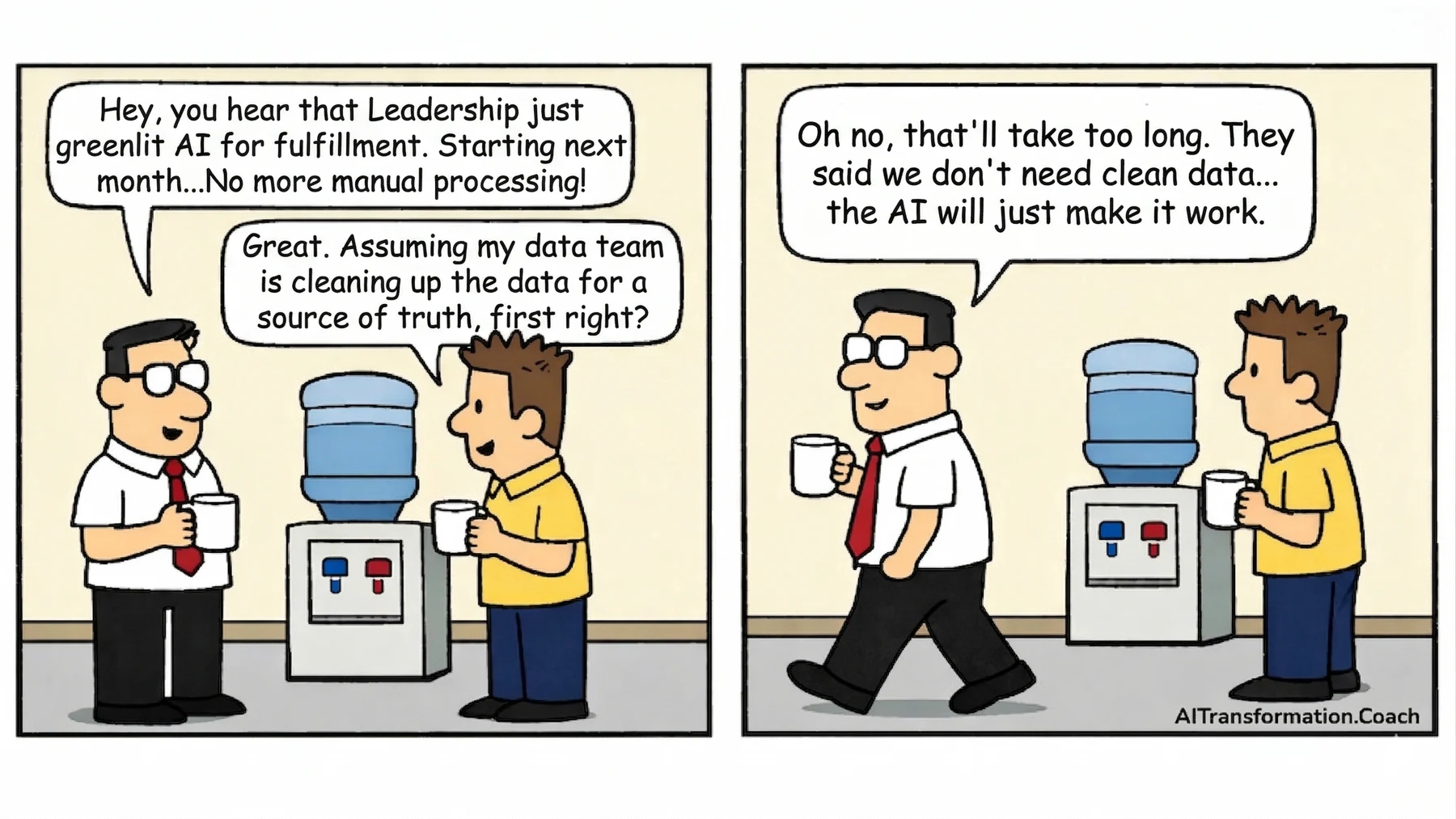
That's the actual outcome when leadership skips data readiness and tells the team, "the AI will just make it work." It won't. And the damage compounds quickly.
Here's what actually happens: AI doesn't arrive at your organization and assess your data quality. It doesn't flag inconsistencies, reconcile duplicate records, or tell you that your "source of truth" hasn't been touched since 2022. It takes what you give it and runs. At scale. At speed. In every direction your broken process points it.
Garbage in, garbage out has always been true. AI just removes the lag time between the garbage and the consequence.
The real problem isn't that leadership wants to move fast. Speed is understandable. The AI landscape is genuinely disorienting, and the pressure to "not fall behind" is real. The problem is the assumption underneath the urgency… that AI is capable of compensating for operational dysfunction that humans haven't been able to fix. It isn't. It amplifies what's already there.
Clean data is not a nice-to-have before an AI implementation. It is a prerequisite. So is a clear, documented process. So is an honest assessment of where the actual friction lives. None of that is glamorous work. All of it is required work.
Organizations that skip it aren't moving faster. They're just moving toward a more expensive failure with more confidence.
The companies that will get real value from AI are doing the unglamorous work first. Auditing their data. Fixing the process before they automate it. Establishing a source of truth their systems can actually trust. That work is slower up front. It also doesn't blow up six months in.
AI doesn't clean up your landfill. It gives it a faster conveyor belt.